Over the years, the Airbus A380 has revolutionized air travel with its innovative design and sheer size. You’ll discover how this colossal aircraft evolved from an ambitious idea into a symbol of modern aviation, transforming the way you experience long-haul flights. In this post, you will explore into its inception, technological advancements, and the challenges Airbus faced during its development journey, ultimately highlighting why the A380 remains a remarkable feat in the history of aviation.
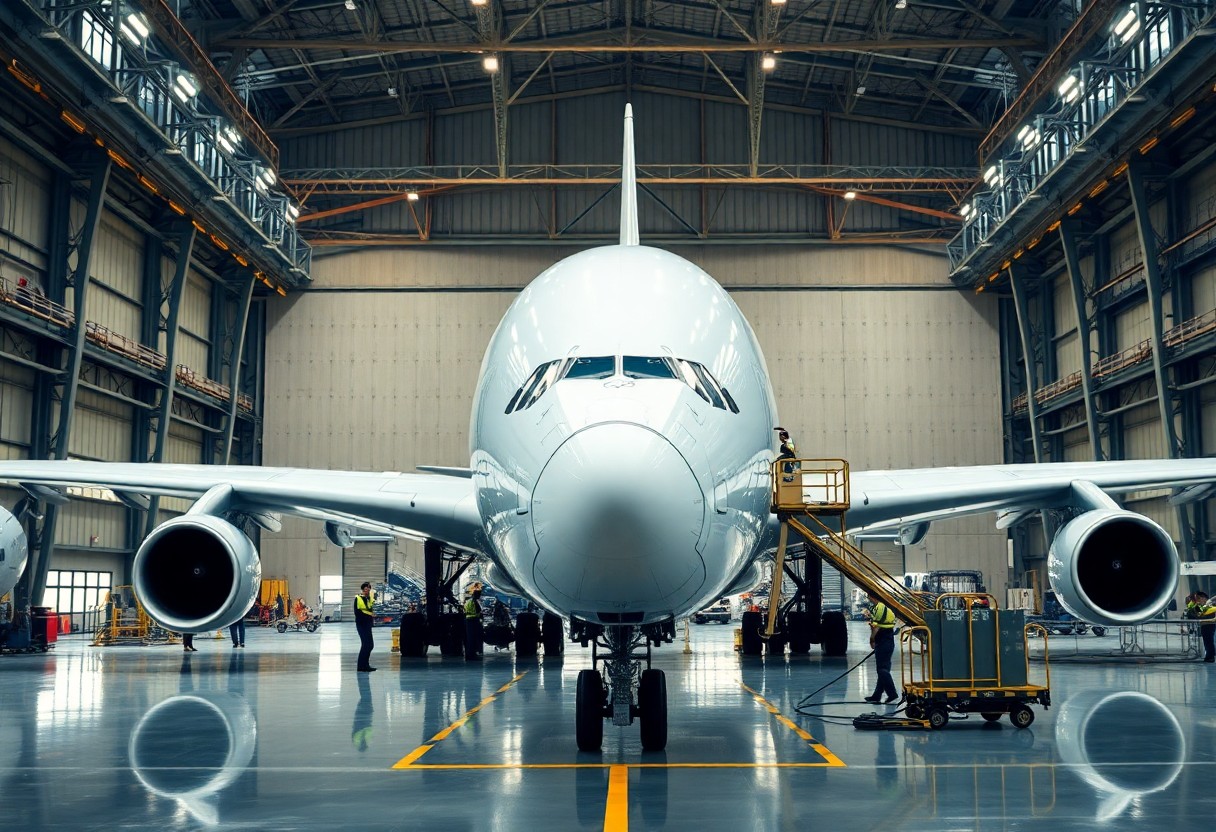
The Beginnings of the Airbus A380 Project
For decades, the aviation industry has evolved alongside growing passenger numbers, leading to a pressing need for larger aircraft. The Airbus A380 project emerged in response to this demand, as airlines sought solutions to accommodate increased capacity and enhance operational efficiency. You will notice that by addressing market trends and anticipating future demands, Airbus aimed to redefine air travel with a superjumbo airliner capable of carrying more passengers than ever before.
The Conceptualization: Market Demand and the Need for a Superjumbo
Demand for air travel was reaching unprecedented heights in the 1990s, prompting airlines to explore options for larger aircraft. With the increasing congestion at major airports and the challenge of maximizing available space, the idea of a superjumbo aircraft became more appealing. You will find that this was a pivotal moment, as Airbus recognized the opportunity to design a plane that could significantly boost capacity and revolutionize long-haul travel.
Initial Design and Development Phases
Any ambitious project begins with a vision, and the A380 was no exception. The initial design and development phases involved extensive research, market analysis, and stakeholder consultations. You would observe that Airbus engineers and planners worked diligently to identify the imperative features and performance specifications necessary for the aircraft’s success, focusing on innovations that would enhance fuel efficiency and passenger comfort.
For instance, Airbus collaborated closely with airlines to gather insights regarding preferred seating configurations and onboard amenities. This customer-focused approach was integral to the design process, as it allowed you to see firsthand how stakeholder input shaped the aircraft’s key characteristics. The engineering team also commenceed on rigorous simulations and prototyping, laying the foundation for what would ultimately become a game-changing addition to the aviation landscape.
Technological Innovations in the A380
Some of the most groundbreaking technological innovations in aviation are showcased in the Airbus A380, making it a marvel of modern engineering.
Advanced Aerodynamics
Some of the A380’s advanced aerodynamics features contribute significantly to its efficiency and performance.
- Supercritical wing design for improved lift and reduced drag.
- Winglets that enhance fuel efficiency by reducing vortex drag.
- Fly-by-wire technology for optimized control during flight.
| Innovation | Description |
|---|---|
| Wing Design | Utilizes a large wingspan to increase lift. |
| Vortex Control | Minimizes turbulence to maintain smoother airflow. |
Materials and Construction Techniques
After exploring the A380’s design, you’ll notice that innovative materials and construction techniques were fundamental to its development.
Innovations in composite materials, such as carbon-fiber-reinforced polymer, allow for a lighter and more durable structure. This reduces overall weight, leading to enhanced fuel efficiency and improved performance. Additionally, advanced manufacturing processes, including automated fiber placement, expedite production while maintaining high-quality standards, ensuring the A380 stands out among its competitors.
Engine Technology: Rolls-Royce Trent 900 and Engine Alliance GP7200
Against the backdrop of modern aviation, the engine technology powering the A380 plays a vital role in its operational efficiency.
Understanding the significance of the Rolls-Royce Trent 900 and Engine Alliance GP7200 engines gives you insight into how these powerplants contribute to the aircraft’s performance. Both engines are designed for maximum thrust and fuel efficiency while minimizing emissions, making them suitable for long-haul flights. Their advanced engineering also includes noise-reduction technologies to meet stringent regulations, promoting a quieter cabin environment for passengers.
The Manufacturing Process
Your understanding of the Airbus A380’s manufacturing process is enhanced by recognizing the complex network of facilities and supply chains involved in its production.
Production Facilities and Global Supply Chain
Across multiple continents, Airbus operates an extensive web of production facilities that contribute to the A380’s assembly. Key components are manufactured in various countries, including wings from the UK, fuselage sections from Germany, and the final assembly line in France. This global supply chain ensures that the best materials and expertise are utilized in the construction of this impressive aircraft.
Assembly Process in Toulouse
On arriving in Toulouse, the individual components from the various production facilities are meticulously assembled to form the A380’s structure. This collaborative effort involves various teams of skilled workers who expertly join the modules, ensuring precision at every stage of assembly.
Another important aspect of the assembly process in Toulouse is the meticulous integration of advanced technology in the final assembly line. You will find that the A380’s fuselage is joined using state-of-the-art techniques, while the installation of systems, such as avionics and hydraulic systems, is conducted with great attention to detail to meet rigorous safety standards. The assembly process reflects Airbus’s commitment to quality and innovation.
Quality Control and Testing Procedures
To guarantee the safety and performance of the A380, an extensive quality control and testing process is in place throughout the manufacturing journey. Each stage of production undergoes rigorous checks to ensure that everything meets Airbus’s high standards before moving to the next phase.
Procedures within the quality control framework involve both automated inspections using advanced technologies and thorough manual assessments by experienced technicians. Components are tested for durability, safety, and compliance with regulations before assembly begins. This commitment to quality extends to final flight tests, where each aircraft undergoes comprehensive evaluations to ensure it meets the expectations of airlines and passengers alike.
The Launch of the A380
Not long after its conception, the Airbus A380 began to take shape, marking a significant moment in aviation history. The launch of the A380 was a bold move by Airbus, setting the stage for the introduction of double-decker superjumbo aircraft that would redefine travel experiences around the globe.
First Flight and Early Testing
At last, on April 27, 2005, the A380 took to the skies for its first flight, showcasing its impressive capabilities and design. This milestone was the culmination of years of development, and early testing followed, allowing engineers to refine the aircraft’s systems and performance, ensuring its readiness for commercial service.
Official Roll-Out and Delivery to Airlines
Testing revealed the aircraft’s strengths, leading to much anticipation for its official roll-out. In 2006, the A380 was publicly unveiled in a grand ceremony, capturing attention worldwide. Deliveries to airlines began in late 2007, with Singapore Airlines being the first to receive its aircraft, creating excitement and eager demand from carriers wanting to expand their fleets.
Market Reception and Initial Operations
Delivery of the A380 was met with enthusiasm, as airlines anticipated its potential to carry larger passengers volumes efficiently. Initial operations began in 2007, presenting a new era in long-haul travel and providing improved passenger experiences through spacious seating and modern amenities.
In fact, the A380’s inaugural flights offered tourists and business travelers alike a remarkable journey, solidifying its reputation as a top-tier aircraft. Airlines leveraging the A380 initially reported high load factors, demonstrating strong market demand. The aircraft’s unique design and enhanced travel experience contributed to its initial success, even as logistical challenges emerged for route planning and airport infrastructure adaptation.
The Operational History of the A380
Unlike many aircraft, the Airbus A380 has had a distinct operational history marked by both triumph and challenges. Initially launched to revolutionize long-haul flying, you can explore more about the Airbus A380 – History, features, design, seat plan. Since its entry into service in 2007, it has been a game changer for international air travel.
Key Airline Operators
With several prominent airlines operating the A380, you’ll find that Emirates stands out as the largest operator of this aircraft, followed by other key players like Singapore Airlines and Qantas. These airlines have incorporated the A380 into their fleets to enhance passenger capacity on popular routes.
Route Developments and Economic Impact
Operational routes have expanded significantly since the A380’s introduction, allowing you to travel on non-stop flights to various major cities. The economic impact has been substantial, as airlines often experience increased load factors and profitability on routes served by this iconic aircraft.
Impact has been felt not just in terms of airline revenues but also in promoting tourism and enhancing connectivity between global hubs. Your travel options have multiplied, with cities traditionally underserved now connected through A380 services. The airplane’s capacity allows airlines to cater to high-demand markets effectively, contributing to vibrant economic activity.
Customer Experience and Cabin Innovations
Around the world, the A380 has set a new standard for in-flight experience, offering spacious cabins and innovative features. You can enjoy amenities such as onboard lounges and larger windows, making long-haul flights more enjoyable.
Even beyond its size, innovations such as quieter engines and advanced air filtration systems enhance your overall comfort and safety. As airlines continue to adopt and adapt the A380, you’ll discover improvements tailored to your needs, making every journey more pleasant than the last.
Challenges Faced by the A380
Despite its groundbreaking design and ambitious goals, the Airbus A380 confronted significant challenges that influenced its place in the aviation industry.
Market Shifts and Competition from Boeing
From its inception, the A380 faced fierce competition from Boeing, particularly with the 787 Dreamliner and the 777X. These aircraft offered airlines flexibility with smaller capacity and better fuel efficiency, appealing to the shifting market demands for more point-to-point routes rather than the hub-and-spoke model that the A380 was designed for.
Operational Costs and Efficiency Issues
Challenges involving operational costs and efficiency significantly impacted the A380’s overall viability in a competitive market.
To maintain profitability, you must consider various factors, including fuel prices, maintenance costs, and the overall economic environment. The A380, while created for high-capacity travel, faced scrutiny for its higher per-seat operating costs compared to smaller aircraft. Airlines started prioritizing operational efficiency, pushing them toward models that provided better fuel economy and lower overall expenses.
Impact of the COVID-19 Pandemic on Demand
To add to the A380’s challenges, the COVID-19 pandemic drastically changed air travel dynamics, reducing demand for large aircraft.
Understanding the effects of the pandemic on the airline industry is vital for grasping the A380’s predicament. With the sudden surges in travel restrictions and a shift toward remote work, many airlines were forced to reevaluate their fleets. The intense drop in passenger numbers led airlines to ground their A380s, further affecting the aircraft’s operational viability and future orders, contributing to Airbus’s decision to cease production of the model.

The Future of the Airbus A380
All eyes are on the Airbus A380 as it navigates through an evolving aviation landscape. With its size and capacity, the A380 continues to offer unique advantages for certain markets, despite challenges posed by the pandemic and shifts in air travel demand. For those interested in understanding more about its legacy, you can explore the History Of The Airbus A380: The Largest Passenger Aircraft.
Possible Upgrades and Modifications
Before considering the future of the A380, many operators are exploring potential upgrades and modifications to enhance its operational efficiency. These could include retrofitting cabin interiors with the latest technology, optimizing fuel systems, and possibly even integrating more eco-friendly materials into its design.
Relevance in the Post-Pandemic Aviation Landscape
Before the pandemic, the A380 was a prominent player in long-haul aviation, but its relevance has since been questioned. As airlines adapt to changing travel behaviors, you might find that the A380 could still serve specific routes or markets where high capacity is needed, particularly with recovering demand for international travel.
Also, as airlines restructure their fleets, some may choose to reintroduce the A380 on busy routes where passenger numbers are steadily increasing. Its large capacity allows airlines to accommodate more travelers, which can be beneficial as the industry recovers from disruptions caused by the pandemic.
Legacy and Influence on Future Aircraft Design
Aviation enthusiasts recognize the A380 as a landmark in aircraft design, influencing future models with its innovative features and scalability. You could see this impact reflected in the design of newer aircraft that prioritize efficiency, passenger comfort, and environmental sustainability.
Relevance of the A380’s legacy becomes clear when you observe trends in aerospace engineering. Airlines aim to replicate its successful aspects while addressing modern challenges, leading to a new generation of aircraft that balances size with eco-friendly technology. The A380 will undoubtedly remain a benchmark in discussions about the future of commercial aviation.
Conclusion
Drawing together the historical milestones and technological advancements of the Airbus A380, you can appreciate the aircraft’s significant impact on aviation. From its ambitious inception to its remarkable design and engineering marvel, the A380 represents a leap forward in capacity and efficiency. Your understanding of its history will enhance your appreciation for how this iconic aircraft has reshaped air travel, connecting millions globally and setting new standards in the aviation industry.