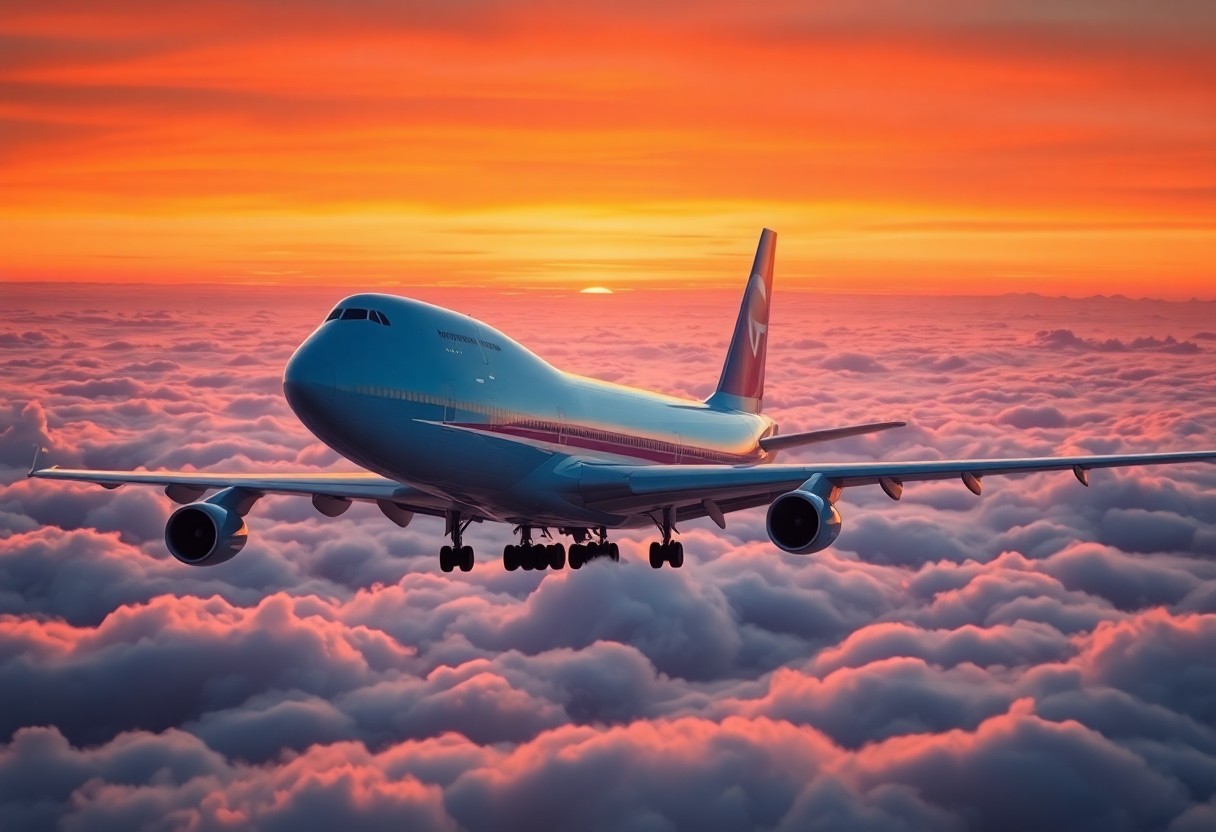
Aviation history is marked by milestones, and the Boeing 747 stands as one of its most iconic achievements. As you explore the remarkable journey of this majestic aircraft, you’ll discover how it transformed air travel and made long-haul flights accessible to millions. From its debut in the 1970s to its enduring legacy, understanding the story behind the 747 will give you insights into its revolutionary design, engineering innovations, and the pivotal role it played in shaping the aviation industry. Join us as you research into the fascinating history of the Queen of the Skies.
The Birth of the Boeing 747
The Vision of Project 921
The vision for Project 921 emerged in the early 1960s, when Boeing sought to revolutionize air travel. This ambitious initiative aimed to create a wide-body, double-deck aircraft, transforming the passenger experience. You would witness how this revolutionary design would enable airlines to significantly increase their capacity and lower operational costs, paving the way for affordable long-haul travel.
Design Challenges and Innovations
Below the surface of this groundbreaking project lay significant hurdles. Boeing’s engineering team faced challenges such as the need for a larger fuselage and the integration of advanced technologies. You can appreciate how their innovative spirit helped to overcome obstacles, leading to the fusion of beauty and functionality in the 747’s design.
At the heart of these innovations was the desire to enhance passenger comfort and operational efficiency. You would see how engineers developed unique features, such as the iconic humpbacked upper deck and powerful, fuel-efficient engines, which set the 747 apart from other aircraft. These elements not only addressed technical challenges but also contributed to the 747’s enduring legacy as an iconic aircraft.
The Role of Boeing Executives
Challenges in managing and financing Project 921 were daunting. Key Boeing executives, including Bill Allen and Joe Sutter, played pivotal roles in navigating these obstacles. Their leadership and vision were vital in making strategic decisions that would shape the direction of the 747 project.
Due to their determination and passion for innovation, executives successfully rallied the necessary resources and talent needed for Project 921. You’ll find that their relentless pursuit of excellence and commitment to quality ultimately ensured that the Boeing 747 would rise above the competition. Their foresight and ability to foster collaboration created an environment where ideas flourished, leading to the successful design of this monumental aircraft.
Early Production and Assembly
About the time the design was finalized, the production and assembly of the Boeing 747 were underway. The scale of manufacturing was unprecedented, requiring a vast workforce and expansive facilities. As you probe into the details, you’ll discover the carefully coordinated efforts that went into crafting each aircraft.
The assembly of the first Boeing 747 took place in Renton, Washington, with significant investments in state-of-the-art production techniques. You would note how the assembly line not only focused on efficiency but also maintained stringent quality controls. The sheer size of the aircraft presented unique assembly challenges, yet Boeing’s ability to adapt its processes ensured that the 747 would become a triumph of engineering mastery and production prowess.

Technical Specifications and Features
Even with its iconic humpbacked silhouette, the Boeing 747 is an engineering marvel that combines size with advanced technology. This chapter explores its outstanding technical specifications and features that have contributed to its status as the “Queen of the Skies.”
Dimensions and Capacity
Capacity is a defining feature of the Boeing 747, which is designed to accommodate up to 660 passengers in a high-density configuration. With a wingspan of approximately 211 feet and a length of 250 feet, this aircraft offers unparalleled space for both passengers and cargo, making it a favorite among airlines for long-haul routes.
Engine Technology
On the performance front, the Boeing 747 is equipped with powerful engines that have evolved over time to ensure efficiency and reliability. Initially powered by Pratt & Whitney JT9D engines, later models utilize advanced engine designs like the GEnx and RB211 that provide enhanced fuel efficiency and reduced emissions.
Indeed, these modern engines are capable of generating up to 66,500 pounds of thrust, significantly improving the aircraft’s performance. Enhanced aerodynamic designs in the wings and fuselage, combined with sophisticated materials, contribute to lower drag and improved fuel economy, allowing you to enjoy a smoother, more economical flight experience.
Interior Design and Comfort
Features such as spacious cabins and innovative layouts ensure passenger comfort on long flights. The Boeing 747 can be configured with various classes—First, Business, and Economy—allowing airlines to cater to different passenger needs and preferences.
Technology plays a significant role in enhancing passenger experience. The aircraft boasts larger windows, improved lighting, and quieter cabin environments, making your journey more enjoyable. Additionally, entertainment systems have evolved to include personal screens, Wi-Fi connectivity, and power outlets, providing you the amenities you seek while flying.
Safety Features and Advancements
Against common misconceptions, the Boeing 747 series is equipped with state-of-the-art safety features that ensure your journey is secure. From advanced avionics systems to redundant systems designed to handle emergencies, the 747 meets and exceeds global safety standards.
It utilizes an array of safety technologies, including Ground Proximity Warning Systems, Traffic Collision Avoidance Systems (TCAS), and advanced weather radar. These systems work in tandem to provide pilots with vital information, ensuring you are in capable hands, even in challenging conditions.
The Maiden Flight and Initial Reception
Now that the Boeing 747 was ready to take to the skies, anticipation built up in the aviation community and among the public alike. Its maiden flight on February 9, 1969, marked a significant milestone in aviation history, showcasing the airplane’s groundbreaking design and immense capabilities. This moment not only validated Boeing’s vision but also set the stage for the era of mass air travel.
First Flight Highlights
Across the vastness of the Pacific Northwest, the 747 lifted off from Seattle’s Paine Field, enchanting onlookers as it soared gracefully into the sky. Piloted by Bob McCulloch, the flight demonstrated the aircraft’s powerful performance, which would soon change how people traveled across the globe.
Passenger Reactions
Reactions from the first passengers aboard the 747 were overwhelmingly positive, as many marveled at the spacious cabin and cutting-edge amenities. You could sense a palpable excitement as people settled into their seats, eager to experience air travel on a larger scale.
But the initial flight was not just about transportation; it became a symbol of luxury and comfort. Passengers appreciated the innovative dual-level design, which allowed for roomier seating and improved overall experiences. Many of them expressed enjoyment over the quieter cabin and spacious aisles, which made flying feel less like a chore and more like an adventure.
Media Coverage and Public Image
Behind the scenes, media outlets rushed to cover the flight of the Boeing 747, capturing its grandeur and significance. Coverage highlighted the technological advancements and the promise this new aircraft held for the future of air travel.
Hence, the publicity surrounding the 747 quickly established it as a marvel of modern engineering. Articles in major publications emphasized its role in making global travel more accessible, while television broadcasts showcased the aircraft in action, further elevating its status and desirability among the traveling public.
Initial Airline Orders
An impressive number of airlines recognized the potential of the Boeing 747, resulting in a flurry of initial orders. Many operators were eager to add this innovative aircraft to their fleets, seeing it as a way to enhance their service offerings.
Media coverage played a pivotal role in this enthusiasm, as airlines were keen to capitalize on the excitement surrounding the 747. Major carriers placed substantial orders, believing that the aircraft would not only attract more passengers but also help set them apart in an increasingly competitive market. The 747 soon emerged as a staple in airline fleets worldwide, reimagining long-distance travel for years to come.
The Boeing 747 in Commercial Aviation
All eyes turned towards the skies as the Boeing 747 revolutionized commercial aviation. This iconic aircraft transcended traditional flying, bringing a new level of comfort and efficiency to air travel. Its massive size and advanced technology allowed airlines to connect cities across long distances, making global travel more accessible for millions.
Influence on International Travel
Below the surface, the Boeing 747 fundamentally altered the nature of international travel. With its ability to carry hundreds of passengers at once, it paved the way for mass air travel, enabling people to explore new destinations more easily than ever before.
Role in Airline Fleet Strategies
On a strategic level, the Boeing 747 became a cornerstone in the fleet strategies of airlines worldwide. Its versatility and passenger capacity allowed carriers to optimize routes and improve overall efficiency, significantly affecting their market presence.
Role in airline fleet strategies typically involves aligning your aircraft choices with your operational needs. The Boeing 747’s unique design allows for both long-haul flights and efficient utilization of resources, making it an indispensable choice for many major airlines. By integrating the 747 into your fleet, you can effectively manage hub-and-spoke networks, reduce operational costs, and enhance profitability.
Evolution of Passenger Services
To adapt to the needs of travelers, the Boeing 747 has continually evolved its passenger services. Innovations from improved seating arrangements to enhanced in-flight entertainment have made your flying experience more enjoyable and comfortable.
Another significant aspect of the evolution of passenger services on the Boeing 747 involves the introduction of newer aircraft models, which have progressively enhanced comfort and technology. You can expect features such as Wi-Fi connectivity, gourmet meal options, and spacious cabins, all designed to elevate your travel experience to new heights.
Impact on Global Tourism
Beside transforming air travel logistics, the Boeing 747 has had a remarkable impact on global tourism. Its ability to transport large numbers of passengers to various locations has made exploring distant lands a reality for many travelers.
Considering this, the Boeing 747 has played a significant role in shaping worldwide tourism trends. As more travelers took advantage of accessible flights, destinations previously limited to a smaller audience became popular travel spots, fostering cultural exchange and economic growth across the globe.
Variants and Innovations over the Years
Development of the 747-100 to 747-8
Your journey through the Boeing 747 variants begins with the development of the 747-100 in the early 1970s, which laid its foundation. Over the years, advancements led to the creation of numerous models, culminating in the technologically enhanced 747-8, which entered service in 2012. This evolution showcases Boeing’s commitment to innovation and meeting changing market demands while improving efficiency and passenger comfort.
Cargo Versions: 747 Freighters
Any mention of the 747 would be incomplete without addressing its pivotal role in air freight. The 747 freighters have transformed global logistics with their substantial payload capacities and unique capabilities, including a distinctive nose that can be raised for easy loading of oversized cargo. This adaptability has made them indispensable in various sectors.
Versions of the 747 as freighters include the dedicated 747-400F and 747-8F, among others. These models allow airlines and cargo operators to move everything from machinery to humanitarian supplies across long distances efficiently. The flexibility of these freighters has solidified the 747’s reputation as a cargo workhorse, meeting the demands of an ever-evolving global economy.
Special Variants: 747SP and VIP Configurations
Any discussion about the 747 variants must include specialized models like the 747SP, designed for long-range travel, and VIP configurations that cater to heads of state and corporate transport. These adaptations highlight the 747’s versatility in various roles beyond standard commercial aviation.
Variants such as the 747SP have been utilized by prominent leaders and governments, offering luxurious interiors with enhanced privacy and comfort. The VIP configurations are often tailored specifically according to individual requirements, showcasing the aircraft’s ability to adapt to high-profile clientele, which further amplifies its legacy and esteem in the aviation world.
Technological Advancements in Subsequent Models
Below the surface of the iconic 747, significant technological advancements have continually redefined its capabilities. Each subsequent model has introduced innovations in fuel efficiency, aerodynamics, and onboard systems, keeping the 747 competitive in a modern aviation landscape.
With features like winglets, advanced flight deck technology, and quieter engines, the later models like the 747-8 represent a leap in aviation technology. These improvements not only enhance operational efficiency but also contribute to a reduced environmental footprint, reflecting Boeing’s responsive design philosophy to meet evolving industry standards and passenger expectations.
The Boeing 747 in Popular Culture
To explore the cultural impact of the Boeing 747, you’ll find that it has made significant appearances in various forms of media and events over the decades.
Appearances in Film and Television
For generations, the 747 has graced the silver screen, with its striking silhouette featured in films like “Airport” and “Executive Decision,” showcasing its grandeur and beauty in high-stakes scenarios.
Notable Events and Historical Moments
Around the globe, the 747 has been part of pivotal historical events, from serving as Air Force One to transporting humanitarian aid during crises, symbolizing hope and resilience.
Another remarkable aspect of the Boeing 747’s legacy is its involvement in notable moments like the first commercial flight in 1970 and its role in the cargo and passenger transport during disasters, illustrating its versatility and significance in shaping global travel and logistics.
Iconic Status in Aviation Heritage
One cannot overlook the 747’s significance in aviation history, as it redefined long-distance travel and remains a beloved symbol of the golden age of air travel.
Indeed, the introduction of the Boeing 747 revolutionized the airline industry, making air travel accessible and creating a new era of mass transportation, cementing its legacy as an iconic aircraft that shaped the way you travel today.
Photography and Enthusiast Communities
Heritage enthusiasts have a particular appreciation for the 747, capturing its stunning design and majestic landings in countless photos that celebrate its enduring allure.
Even today, photography communities thrive with enthusiasts showcasing their shots of the 747 at various airports or during special aviation events, fostering a deep connection and admiration for this aircraft among those who appreciate its engineering marvel and beauty.
The Legacy and Future of the Boeing 747
Unlike any other aircraft, the Boeing 747 has carved its place in aviation history as a symbol of innovation and luxury. As production winds down, you may wonder what lies ahead for this iconic giant of the skies. The legacy of the 747 continues to influence both the industry and the flying experience.
The End of Production
Behind the 747’s extraordinary journey, the decision to cease its production in 2023 marked a significant shift in commercial aviation. This wasn’t just about phasing out a model; it was about recognizing a changing landscape where newer, fuel-efficient aircraft dominate the market.
Preservation and Restoration Efforts
Preservation efforts are crucial for keeping the spirit of the Boeing 747 alive. Aviation enthusiasts and organizations are actively working to restore and showcase retired 747s, ensuring that future generations can appreciate this magnificent aircraft.
Legacy projects, such as converting retired 747s into museums or even hotels, allow you to experience the grandeur of the Queen of the Skies firsthand. These initiatives not only preserve the aircraft but also celebrate its engineering marvel and the memories it helped create for millions of travelers around the world.
The Shift Towards New Aircraft Models
Across the aviation landscape, airlines are increasingly investing in modern aircraft models that prioritize efficiency and sustainability. This shift reflects a desire to meet the demands of a more environmentally conscious customer base.
With advancements in technology, new aircraft models are designed to reduce operational costs and emissions, transforming the way you think about air travel. While the Boeing 747 will always hold a special place in aviation history, you may find that these new models offer exciting new experiences and capabilities that the industry is keen to embrace.
Commemorating the Queen of the Skies
For enthusiasts and former passengers alike, commemorative events and gatherings celebrate the lasting impact of the Boeing 747. These occasions serve as a tribute to an aircraft that changed the face of air travel.
Celebrations often include airshows, exhibitions, and dedicated museum displays that provide you with insights into the aircraft’s design and cultural significance. By participating in these events, you can connect with fellow fans and honor the legacy of the aircraft that redefined long-distance travel.
Models of the 747 can also be found in various forms, from die-cast collectibles to detailed flight simulators. These replicas serve as a tangible reminder of the aircraft’s grandeur and your unforgettable experiences associated with it.
Conclusion
Conclusively, your understanding of the Boeing 747, often hailed as the Queen of the Skies, reflects not only its impressive engineering but also its significant impact on commercial aviation. By exploring its rich history, you gain insight into how this iconic aircraft transformed global travel and shaped the industry standards that continue to influence modern aviation today. As you appreciate its legacy, you recognize the Boeing 747’s enduring place in the hearts of travelers and the skies alike.