Airplanes have long captured your imagination with their innovative designs and engineering marvels. In this post, you will explore some of the most iconic aircraft that have shaped aviation history, showcasing their unique aesthetics and functionality. From sleek commercial jets to experimental military machines, these unforgettable designs not only revolutionized air travel but also continue to influence modern aerospace technology. Join us as you discover the stories behind these remarkable flying machines and the visionaries who brought them to life.
The Golden Age of Aviation
Before delving into the designs of the Golden Age of Aviation, it’s vital to understand how earlier conflicts shaped aircraft development. This era flourished between the two World Wars, a time when aviation took significant leaps forward.
The Impact of World War I on Aircraft Design
At the conclusion of World War I, aircraft design underwent a transformative change. The merits of advanced aerodynamic shapes and powerful engines became apparent, leading to innovations that shaped the future of aviation. Airplanes transitioned from mere reconnaissance tools to versatile machines capable of combat and passenger transport.
Iconic Aircraft from the Interwar Period
On the heels of World War I, the interwar period saw the birth of several iconic aircraft that would leave a lasting legacy in aviation history. Designers embraced artistry and engineering to create planes that were not only functional but visually striking.
The Douglas DC-3 is perhaps one of the most famous aircraft from this time, revolutionizing air travel by introducing reliability and comfort for passengers. Equally notable, the Lockheed Vega showcased cutting-edge design with its streamlined shape and robust performance capabilities. These aircraft didn’t just serve practical purposes; they captured the imagination of the public and solidified aviation’s role in modern society.
The Role of Innovation in Aviation Design
World War I set the stage for significant innovations in aircraft design, fueling a wave of experimentation that characterized the Golden Age of Aviation.
For instance, advancements like metal airframes and retractable landing gear allowed for faster, more efficient aircraft. The introduction of new materials and engineering techniques enhanced safety and performance, changing how you think about flying. As aviation enthusiasts, you can appreciate how these innovations not only shaped the planes of the era but also paved the way for future developments in aviation technology.
The Dawn of Jet Age
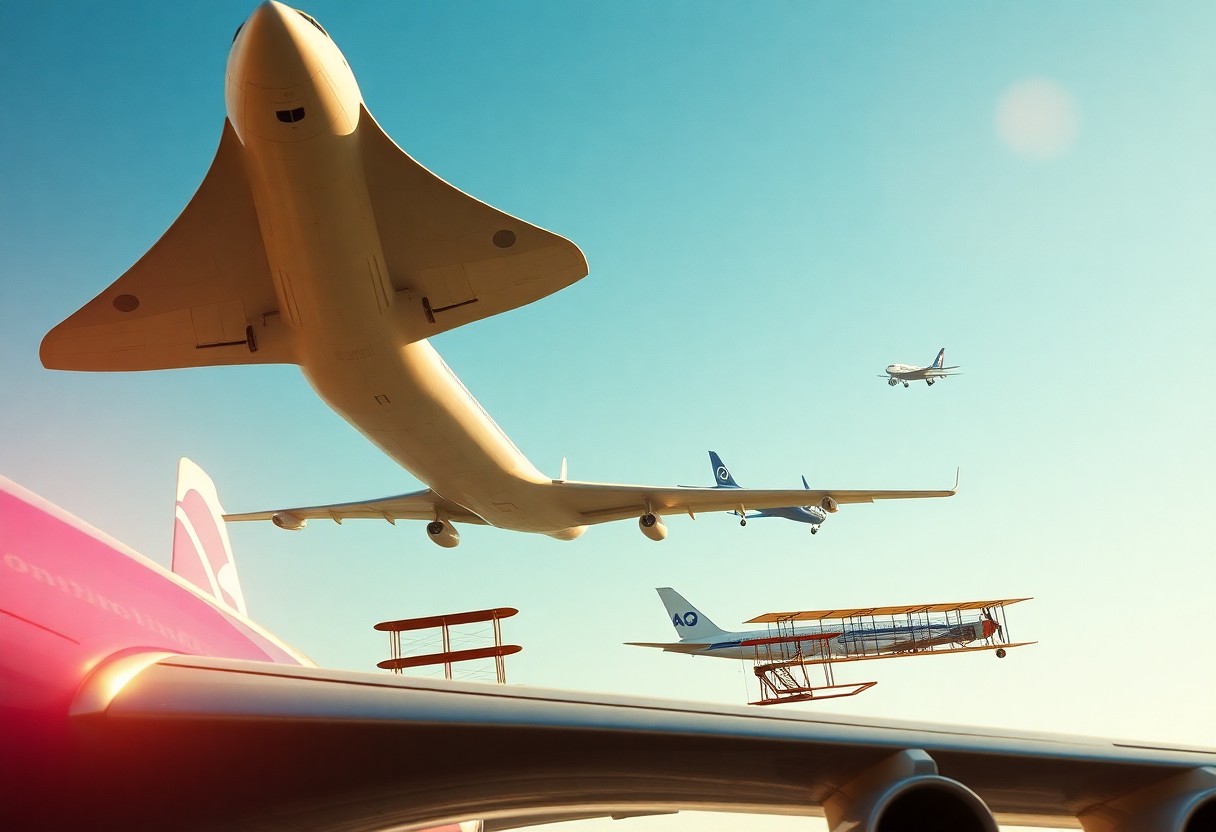
Some of the most iconic airplane designs emerged during the dawn of the jet age, marking a significant shift in aviation history. This transformative period introduced faster and more efficient aircraft that not only revolutionized air travel but also captivated the imagination of countless aviation enthusiasts. Two remarkable airplanes from this era stand out: the Lockheed Constellation and the Boeing 707, each representing the innovative spirit of their time.
The Lockheed Constellation: A Design Masterpiece
After its introduction in the late 1940s, the Lockheed Constellation quickly became synonymous with elegant design and advanced engineering. With its sleek lines, distinctive triple-tail configuration, and spacious interiors, this aircraft was not just a mode of transport but a symbol of luxury for airline passengers. The Constellation was widely celebrated for its innovative features, making it a design masterpiece of the era.
The Boeing 707: Transitioning to Jet Travel
Transitioning to the Boeing 707 marked a pivotal moment in commercial aviation, as it became one of the first successful jet airliners. Launched in 1958, the 707 offered airlines the ability to fly longer distances faster than ever before. Its spacious cabin and iconic design not only made it popular among airlines but also among travelers seeking more comfortable experiences at high altitudes.
Plus, the Boeing 707 was instrumental in changing the landscape of air travel. With its powerful jet engines, airlines could establish transcontinental and international routes, making air travel accessible to more people. This aircraft laid the groundwork for modern commercial aviation, influencing the design of subsequent jet airliners and solidifying the Boeing 707’s place in history as a game-changer in the industry.
The Influence of Aerodynamics
For the dawn of the jet age, aerodynamics played a vital role in designing faster aircraft. Engineers began prioritizing streamlined shapes, allowing planes to cut through the air more efficiently. This shift led to innovations that drastically improved speed and fuel efficiency, making air travel a more viable option for the masses.
The focus on aerodynamics not only improved the performance of jet aircraft but also changed the way you think about flight itself. Design features such as swept wings and engine placement became standard, allowing for smoother, quieter rides. As designers optimized airframes based on scientific principles, the result was a new era of aviation that truly redefined the boundaries of human flight.
Unconventional Designs
Keep an eye on the extraordinary aircraft that have redefined aviation history through their unconventional designs. These iconic airplanes showcase innovative approaches, pushing the boundaries of engineering and performance.
The Concorde: Supersonic Flight Revolution
By blending cutting-edge technology with sleek aesthetics, the Concorde became a symbol of luxury and speed. This supersonic passenger jet significantly reduced travel times, allowing you to cross the Atlantic in just over three hours.
The Lockheed SR-71 Blackbird: Speed and Stealth
Speed and stealth merged in the Lockheed SR-71 Blackbird, an aircraft that represented the pinnacle of reconnaissance technology.
But what truly set the SR-71 apart was its ability to fly at unprecedented speeds—over three times the speed of sound. This astonishing capability allowed it to evade enemy missiles and cover vast distances rapidly, providing vital intelligence during the Cold War. Its unique shape and advanced materials also contributed to its low radar visibility, cementing its status as an engineering marvel.
The B-52 Stratofortress: Enduring Design Legacy
Designs like the B-52 Stratofortress have proved their resilience through decades of service, showcasing a design that has stood the test of time.
For instance, the B-52’s adaptable architecture has allowed it to perform a variety of missions—from conventional bombing to strategic deterrence. Introduced in the 1950s, this long-range bomber remains in active service due to ongoing upgrades and modifications, reflecting its versatility and reliability as a critical component of the U.S. Air Force’s global reach. Its unique profile and powerful engines continue to evoke admiration and respect in aviation circles.
The Evolution of Passenger Aircraft
Now, the evolution of passenger aircraft reflects remarkable advancements in technology and design. From early pioneers to modern marvels, the journey of air travel has witnessed significant milestones. According to 36 of the best planes of all time: From mighty jet fighters to …, these changes have shaped the way we fly today.
The Boeing 747: The Original Jumbo Jet
The Boeing 747, introduced in 1970, revolutionized air travel with its distinctive hump and double-deck design. As the first wide-body aircraft, it increased seating capacity and transformed long-haul flights, making them more accessible and affordable for the masses.
The Airbus A380: The Future of Air Travel
Passenger comfort took a giant leap forward with the Airbus A380, which debuted in 2005. As the world’s largest passenger aircraft, the A380 could accommodate more passengers while providing spacious cabins and advanced amenities.
Indeed, the Airbus A380 is designed to prioritize passenger experience. Its two full-length passenger decks allow for a variety of seating configurations and onboard services that enhance comfort during flights. Innovations such as quieter engines and improved air quality contribute to a more pleasant flying experience.
Design Features that Enhance Passenger Experience
Future aircraft designs continue to evolve, focusing on enhancing your travel comfort. Innovations such as improved seating designs, better cabin pressure systems, and ambient lighting are being integrated into modern aircraft.
Enhance your flying experience with thoughtfully designed features that prioritize comfort and convenience. From adjustable headrests to personal entertainment systems, these improvements ensure that your journey is enjoyable, regardless of flight duration.
Experimental and Conceptual Aircraft
After delving into iconic aircraft designs, it’s fascinating to explore experimental and conceptual aircraft that push the boundaries of aviation technology. These designs reflect the vision and innovation that drives the industry forward, paving the way for safer, more efficient air travel.
The NASA X-57 Maxwell: Electrification in Aviation
Around the world, the NASA X-57 Maxwell represents a significant leap towards electric aviation, showcasing the potential of environmentally friendly technologies in aircraft design. With its innovative distributed electric propulsion system, the Maxwell aims to demonstrate improvements in efficiency and noise reduction, setting a benchmark for future commercial aircraft.
The V-22 Osprey: A Hybrid Design
Conceptualized as a multi-role military aircraft, the V-22 Osprey seamlessly blends the capabilities of a helicopter with those of a fixed-wing airplane. Its unique tilt-rotor design allows it to take off and land vertically like a helicopter while achieving higher speeds and greater range typical of traditional airplanes.
Also, the Osprey’s versatility has transformed military transport, enabling it to perform various mission profiles, from troop transport to medical evacuations. Its innovative design has influenced other aerospace projects, demonstrating that hybrid aircraft can enhance operational effectiveness in complex environments.
Innovations from the Skunk Works Program
An iconic part of aerospace history, the Skunk Works program, developed game-changing aircraft like the Lockheed SR-71 Blackbird and F-117 Nighthawk. These aircraft were not only groundbreaking in design and technology but also set standards for stealth and reconnaissance capabilities that remain influential today.
Design elements like the SR-71’s sleek fuselage and advanced materials exemplified how innovative engineering can push the limits of speed and altitude. The F-117 revolutionized stealth technology with its angular design, offering critical insights into how transformative concepts can reshape military aviation and beyond.
The Influence of Technology on Aircraft Design
Unlike previous eras where design was predominantly manual, modern aircraft design has significantly evolved through technological advancements. Innovations in engineering and design have reshaped the way you perceive aircraft aesthetics and functionality. For more insight, check out 10 Famous Airplanes in Aviation History.
Computer-Aided Design (CAD) in Aviation
Aircraft design has become increasingly precise and efficient thanks to computer-aided design (CAD) tools. These technologies allow you to create intricate designs and simulations, making it possible to visualize concepts before moving to production. The integration of CAD ensures that every detail, from aerodynamics to mechanical components, is meticulously planned and executed.
Advances in Materials Science and Their Impact
Influence of materials science on aircraft design has been profound. New materials, such as carbon fiber composites and lightweight alloys, allow for improved strength and fuel efficiency. As a result, you can enjoy faster and more economical flights, while also enhancing the overall performance and safety of the aircraft.
Understanding the importance of materials science establishes a foundation for innovative designs in aviation. The development of advanced materials not only contributes to reducing weight but also enhances durability and resistance to environmental conditions. This adaptability directly translates into longer-lasting aircraft and reduced operational costs, making air travel more effective for passengers and airlines alike.
Autonomous Aircraft: The Next Frontier
Advances in aircraft technology have brought us to the brink of revolutionizing air travel with autonomous systems. These innovations allow the aircraft to perform many tasks traditionally managed by pilots, enhancing safety and efficiency. With the possibility of having automated navigation and systems monitoring, you may soon experience a new level of convenience in air travel.
Computer-aided systems are imperative to the emergence of autonomous aircraft. By utilizing advanced algorithms and machine learning, these aircraft can analyze real-time data to make informed decisions. This capability promises to enhance operational efficiency and safety, transforming the way you think about flying. As autonomy in aviation progresses, you can expect significant shifts in flight experiences, paving the way for a more efficient and innovative future in air travel.
The Future of Airplane Design
All signs point towards an exciting evolution in airplane design, combining cutting-edge technology with a commitment to sustainability. As aviation continues to transform, you can expect innovations that enhance efficiency and improve the passenger experience while addressing environmental concerns.
Sustainable Aviation and Green Technologies
Between advancements in electric propulsion, biofuels, and lightweight materials, sustainable aviation is becoming a reality. Airlines are increasingly focusing on eco-friendly technologies, aiming to reduce carbon footprints and meet stringent emissions standards without compromising performance.
Emerging Trends in Urban Air Mobility
On the horizon, urban air mobility is reshaping how you think about transportation in cities. The development of electric vertical takeoff and landing (eVTOL) aircraft promises to bring about an era of quicker, more efficient travel, reducing congestion on the ground and making air travel an everyday option.
Urban air mobility will offer you the chance to bypass traditional traffic and make short commutes more enjoyable. As cities embrace this innovative mode of transportation, you might find yourself flying to your next meeting or event while enjoying spectacular aerial views, all thanks to the compact design and agility of eVTOL aircraft.
Rethinking Cabin Design: The Passenger Experience of Tomorrow
Airplane cabin design is undergoing a transformation to prioritize your comfort and convenience. Designers are focusing on flexible seating arrangements, improved amenities, and personalized in-flight experiences tailored to your preferences.
Another important aspect of this redesign is the integration of advanced technology within the cabin. With features such as virtual reality entertainment and smart interfaces, your flying experience will become more immersive and engaging. Enhanced lighting, noise reduction, and customizable environments will make the time spent in the air more enjoyable and relaxing, ultimately redefining what it means to travel by plane.
To wrap up
Upon reflecting on the most memorable airplane designs in history, you gain a deeper appreciation for the innovation and creativity that have shaped modern aviation. Each aircraft tells a unique story of engineering prowess and aesthetic appeal, influencing not only air travel but also the cultural landscape. Whether it’s the sleek lines of the Concorde or the versatility of the Cessna 172, these designs are a testament to human imagination. As you explore this fascinating subject, you enrich your understanding of how these iconic airplanes have transformed the way you experience flight.